Showing posts with label book history. Show all posts

Monday, April 10, 2017

Book History from A to Z: U is for Universities


The earliest universities grew from institutions for the education of clergy, both those in monastic houses and those who were not.  When the monastic orders began to confine their educational efforts to only the members of their orders, cathedral schools began gathering teachers and students.  As towns and cities grew the universities grew with them.  The largest universities in Europe were in Bologna and Paris.  Universities are important to the history of books because the main function of the teachers was to read the classic works in each discipline and comment on them or dispute over them with other professors or students.  That was how students were taught.  The universities began gathering collections of books for students to read and copy.  Some of the books were donated to the universities, others were owned by stationers who would rent them to students in sections to be copied by hand.  The books were necessary for both the reading aloud and for preparing for the disputations—where the two sides of the argument were always given, therefore the professors had to do research and consult the sources of law or theology or whatever subject they were disputing.  Books were still quite expensive during these early days of the university, and most students could not afford to buy them, thus the renting and copying.  At libraries during medieval times, books were often chained to a table in a reading room, so that students could not steal them.

Fortunately, we do not have to chain the books to the table in the reading room any more--we can circulate them to students instead. :)

Image from wikimedia commons. It is in the public domain.

Tuesday, October 18, 2016

Book History A to Z: T is for Typography


Typography is the art of selecting the forms of letters to be used in printing.  It can involve designing the type face, as well as the page layout of a printed page or book.  Typography contributes to the overall ease of reading a book and its appearance—whether it is pleasing to look upon or merely utilitarian.  Early printers often tried to gain a monopoly on certain type designs, as they were beautiful and popular with book collectors, and the printers wanted to use them exclusively so as to gain an advantage in selling their books.  Since there were no strict intellectual property laws, however, this was unrealistic and in most cases impractical.  
Type designers needed to earn a living, too!

Kelmscott Colophon Photograph from Wikimedia Commons, licensed for reuse.

Thursday, March 24, 2016

Book History from A to Z: S is for Stereotyping

And you thought stereotyping was when someone made assumptions about a group of people based on some broad category...read on for the probable origination of the term as we now use it.  ;D

Stereotyping was an advance in printing that involved making a mold of an entire page of print.  The page could then be printed in future without resetting the type.  Besides making reprints cheaper and faster, stereotyping made metal type last longer—it would normally be worn down each time it was used.  Stereotyping was tried as early as the 1700s;  in 1804 Lord Stanhope invented a method of making a plaster mold of the page of type, then filling the mold with molten lead, in essence making a copy of the “bed of type.”  Even though the stereotype plates could make reprints of popular items like Bibles easy to reproduce, it wasn’t widely used during the 1700s partly because typesetters, called compositors, organized into unions to protect their jobs and partly because the process of stereotyping required extra training for workers.  The plaster used to make the molds was difficult to clean from the type, and the type could be damaged in the process.  Later on, a material called “flong,” which was made of paper, was used to make the molds for stereotyping.  Flong did not damage the type as the plaster did and was easily removed from the type.  

Photo source:  commons.wikimedia.org, labeled for reuse.

Monday, October 26, 2015

Book History A to Z: R is for Roman a clef

I find this one pretty interesting--it is sort of like an "unauthorized" biography, only it goes a step further by fictionalizing those involved.  Of course, part of the reason is to prevent the author from being hauled into court, or otherwise retaliated against, but as you know that doesn't always work.  The translation is "novel with a key,"  they key presumably being knowing who is who in the book.  According to one source, the originals actually had a key--published separately, that named names. 
The Roman a clef began, according to the Encyclopedia Britannica, during the 17th century in France, when a few stout souls dared to write about courtiers of Louis XIV and include them in historical fiction.  Later examples include Simone de Beauvior's Mandarins, and the more recent Primary Colors. 


Tuesday, March 3, 2015

Book History from A to Z: Q is for Quarto


A quarto was made by folding the paper or vellum twice into four leaves or eight pages.  It would have been roughly half the size of a folio.   
In this photo, the largest volume is a folio (folded once--if you recall an earlier post about that).  The second largest is a quarto.  

Photo from OSU libraries:
https://library.osu.edu/innovation-projects/omeka/exhibits/show/the-king-james-bible/sidebars

Thursday, January 22, 2015

Book History from A to Z: P is for Papyrus and Paper

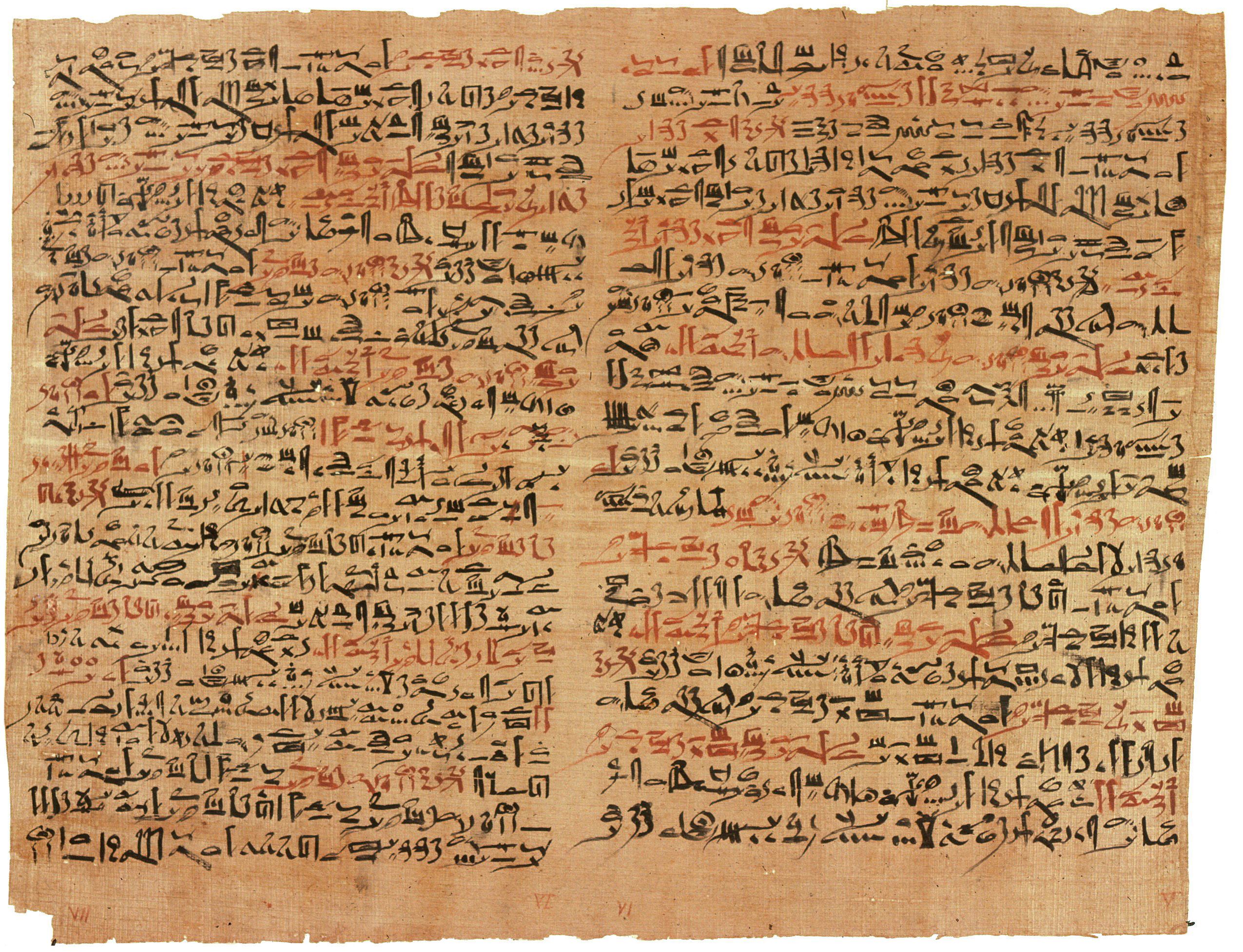
Papyrus was an early form of paper, made from papyrus plants which grew in the Nile valley of Egypt.  The stems of the plants, which are fibrous, were laid in layers and pressed.  The pressure caused the stems to bond together when they dried and form into a white paper.  Because of the ridges caused by the stems, the papyrus was difficult to write on horizontally, one reason that parchment was preferred for Western writing.  Papyrus could only be used on one side, and it was normally rolled and tied with string, though it could be made into codices. 

Paper making began in China in the early 100s CE, was established in Bagdad around 795, and came to the West by way of the Crusades and the Moorish conquest of Spain and Portugal.  The demand for paper grew as the printing industry grew, replacing parchment in the 1400s.  At first, paper was made of rags, which were bleached and made into a pulp, pressed into forms and dried.  This early paper was very durable.  In the 1840s, German paper manufacturers discovered how to make paper using wood pulp.  Later in the same century, chemicals were added to the process, especially acid, and the paper from this period is very delicate—it turns yellow and brittle with age and begins to crumble.  Newspapers, especially from the 1800s and early 1900s have greatly deteriorated, while books made from the rag paper in the 1700s and the first half of the 1800s are still usable. Be sure to print anything you want to keep for a long time on acid free paper.  :)

Image  is the Edwin Smith Papyrus from en.wikipedia.org

Thursday, December 4, 2014

Book History from A to Z: O is for Octavo

An octavo was made by folding the paper or vellum four times into eight leaves or sixteen pages.  It would have been about half the size of a quarto and one quarter the size of a folio.  This was the most common size for novels once they became popular, because they could easily be carried.  A smaller size, the duodecimo, also called a twelvemo (12mo), was folded to make twelve leaves or twenty-four pages.  This was a popular size, as it was even easier to conceal or carry on your person than an octavo.  It would have been roughly the same size as a paperback book today, where an octavo would be about the size of a hardback book. 

Image of Octavo version of Milton--http://www.cems.ox.ac.uk/citizenmilton/iv_paradise.shtml

Friday, September 19, 2014

Book History A to Z: N is for Novel

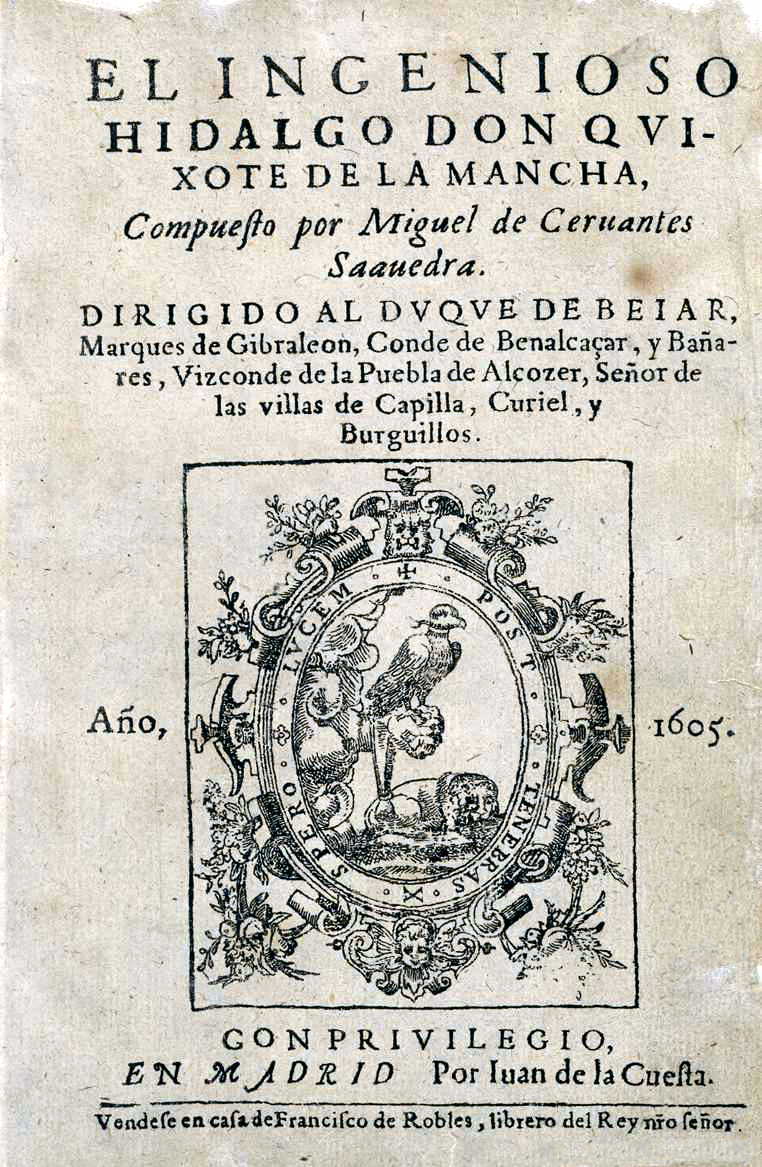
Novels are a form of written narrative that is centered on telling the story of an individual.  Cervantes’s Don Quixote (1605-15) is sometimes considered a precursor to the novel, and Daniel DeFoe’s Robinson Crusoe (1719) and Moll Flanders (1722) and Samuel Richardson’s Pamela (1740-41) are considered the first “real” novels.  These works were not based on legends, or retold tales from the past, they were original stories about individual people. Although there were other types of narrative stories, such as French romans, novels were rooted in realism, in what real people might experience, not in larger than life characters or epic heroes, as in the romans.  The novel eventually became the first literary form to tell the stories of average people, and to be widely read by all social classes.


Image from Wikipedia and labeled for reuse.

Thursday, July 17, 2014

Book History A to Z: M is for Manuscript


Manuscripts are hand written books which were made before the invention of printing and for some years after printing was widely practiced.  Most often, manuscripts were written by monks or nuns in a scriptorium.  The writing was very uniform and neat.  Many manuscripts were illuminated, that is decorated with colorful painted initials, miniature paintings, or border paintings.  Illuminations first appeared in the 300s, and were an important part of books until the Renaissance.  Illumination was used in some early printed works, but as mechanical means of illustrating books became more popular, it fell out of favor.  

Photograph of the Ranworth Antiphone c. Ashley Dace.  Creative Commons license granted for reuse.

Monday, May 12, 2014

Book History A to Z: K is for King Mathias Corvinus


Matthias Corvinus was the king of Hungary from 1458 until 1490.  He is known for many things—he was the last great ruler of Hungary before it was divided between other dynasties, including the Ottoman Turks, he was a warrior who led the Black Army and strengthened the Hungarian state, and he was a bibliophile who amassed one of the greatest libraries of his time, second only to that of the Vatican.  Matthias loved learning and he collected mostly Latin and Greek works and mostly manuscripts.  Many collectors during the early printing era were unsure of the quality of printed books in comparison to hand written copies.  His collection is estimated to have been somewhere between 2000-2500 volumes and they were housed in a library in Buda Castle and cared for by two Italian humanists who served as Matthias’s librarians.  Unfortunately, after Matthias’s death in 1490 and the Ottoman conquest of Buda in 1541, the manuscripts and books were dispersed, and many were destroyed.  About 200 are known to exist today, with 53 of these being held in Hungary and the rest in collections around the world.  Matthias’ library is so famous, that any manuscript or book known to have been in the Bibliotheca Corviniana is referred to as a Corvina.

The library is being reassembled "digitally" at the Bibliotheca Corviniana Digitalis, however, the only languages currently available are Hungarian and Italian.  If you would like to read more in English, there is some additional information at UNESCO about the digital reconstruction.

Portrait of Mathias Corvinus from Wikipedia, labeled for reuse.

Thursday, May 1, 2014

Book History A to Z: J is for Jest Book


As a reaction to the serious religious and romantic writings of the medieval period, jest books were compilations of witty sayings, often centered on a specific character.  They were popular in the 1500s, especially in Italy.  In England, Richard Tarleton, a famous comic actor of Elizabethan times, is believed to have created the stage role of the “yokel” and also to have written one or more jest books, although not all the titles attributed to him are believed to have been written by Tarleton.  


Right is an image from a jest book, the source is on the bottom. 

While I am on the  subject of illustrations, the approximation of the J above is from a new flickr photostream I have found courtesy of SHARP.  I am a member and find many interesting historical factoids by reading the listserv.  The photo comes from https://www.flickr.com/photos/bookhistorian/.  My thanks to Paul Dijstelberge for sharing these wonderful photographs.  For more about his work on Book History, please visit one of his blogs (this one is in English) http://abeautifulbook.wordpress.com/.


Wednesday, April 9, 2014

Reading Then and Now


This past weekend, I attended the "Reading Then and Now" conference at the University of Virginia.  It was a wonderful event.  I came away with many new ideas and, of course, a new list of books to read.  Here are the highlights that I thought would be of use to teachers and students:


The UVa Scholars Lab has developed a collaborative reading/annotation space called PRISM.  There are many ways that teachers and students can use this, in fact, it is being used by the k-12 community in ways unexpected by the developers, which I think is fantastic.  The basic idea is that there is a text in the "window," which can be highlighted by individuals according to preset themes or ideas, or elements.  Then you can look at the passage and see what percentage of students marked which theme in what section.  If that is too confusing, try the PRISM tutorial on YouTube, embedded here.

It is meant to be a conversation starter for class discussion of a text.  Why did we all mark this?  Why did some of us mark the same section one way and some another, etc.  Even the presenters said that it isn't meant to be an end in itself, but it might be a way to infuse a little fun into something that students do not usually enjoy, annotating.  You can create your own Prisms, with uploaded text of your choice, and they can be private to your group or public.  It is definitely something worth trying out.

Juxta Commons is a tool that allows you to compare two (or more) versions of the same text.  The presenter I saw used it to look at two different editions of a published text, but students could conceivably use it to compare drafts of their own papers.  The main thing to remember is that Juxta collates different versions of the same text and shows you the differences, so it would not be something you would use widely, but it could be helpful in showing how much revising a student has done, or if you were looking at two versions of the same story, etc.


I had several nerdtastic moments while in Charlottesville.  First of all, there is something about a university founded by Thomas Jefferson, built on a farm once owned by James Monroe that lends it a certain gravitas.  It is a history nerd's version of heaven.  Then there is the added bonus of seeing Edgar Allan Poe's preserved dormitory room.  On display in the special collections were a first edition of Montaigne essays and an early edition of Hamlet (printed just after Shakespeare's death).  The keynote speaker was Andrew Piper from McGill University and, being a fan, I brought, Dreaming in Books along and asked him to sign it.  Yes, I am that big a nerd.  And finally, on the last day, I attended a talk in the Rare Book Room where I held in my hand an Aldus Manutius.  If you don't know what I am talking about, see my earlier post, here.  The photo to prove it...

Photo of Aldus Manutius Dolphin and Anchor taken with permission at the Alderman Library 4/6/2014

PS--for the full-length version of the paper I presented, see the link in the right sidebar under Workshop Handouts--"Men Reading Badly"

Wednesday, April 2, 2014

Book History: I is for Incunabula

Incunabula are books printed in the earliest years of mechanical printing.  Generally, they are books printed between Gutenberg’s invention of a method of printing with movable type in 1448 until the opening of the sixteenth century in 1501.  The word incunabula is derived from the Latin, meaning “cradle” or “swaddling clothes,” therefore the beginning of something.  Incunabula are the beginning of modern printing and book making.  One of the most famous incunabulum is the Gutenberg Bible, of which there are 22 known copies still existing out of approximately 200 that were originally printed.  

Gutenberg Bible image from the Harry Ransom Center. 


Friday, March 21, 2014

Book History: H is for Hornbook

A hornbook was a teaching device for beginning readers. It was made of a rectangular piece of wood with a handle to which was attached a piece of paper or parchment with the alphabet, the Lord’s Prayer, Roman numerals, and letter combinations.  Over the paper or parchment, a clear piece of horn was laid to cover and protect it.  Often, there was a hole in the handle of the hornbook, through which a cord or strip of leather was passed so that the student could attach the hornbook to a belt or wear it around the neck.  Hornbooks were used as early as 1442, becoming popular in the 1500s until the 1700s when paper became cheaper to manufacture, and they were gradually replaced by cardboard folders with illustrations accompanying the text of the lessons.  Like early school books of all types, hornbooks are rare now, because they were generally used until they fell apart.  


Wednesday, March 12, 2014

Book History: G is for Gutenberg

Johannes Gutenberg invented a method of printing using movable type made of metal.  This was a huge improvement over the previous method of printing, which was to carve one page at a time out of a wooden block, ink the block, and stamp the pages.  Because the movable type could be reused to print any number of pages, it made printing more affordable and printed books more accessible to people.  Gutenberg adapted a wine press, which allowed him to slide pages in and out of the press, and also to squeeze the water out of the paper after printing.  Because of the movable type, printing was much faster and cheaper.  Gutenberg’s printing press changed the world by bringing books closer to common people.  Over time, as printing became even cheaper and easier, anyone could own books.  Anyone could study and amass knowledge, not just the privileged few.
 **Woodcut from Wikipedia


Friday, February 28, 2014

Book History: F is for Folio

A folio is made by folding the paper or vellum one time to form two leaves or four pages.  Both sides of the leaves are used for writing or printing, so one fold makes four pages.  A group of folios could be sewn together to form a book.  Because paper was rather large and animal skins were also, a book made of folios was a large format book.  The sizes of the sheets were not standard, so there is not one measurement that is “folio size.”  Folio refers to the fact that the sheets were only folded once.  Once books were made using machine presses and paper became more uniform in size, folio was used to describe books that are taller than 30 cm (about 11 ¾ inches)) or wider than 23 cm (about 9 inches).  Folios are often shelved lying flat to put less stress on the hinges of the book. 

**Folio photo from the Folger Blog--The Collation  14 November 2011 entry

Friday, February 14, 2014

Book History: E is for Emblem Book

An emblem book was a book of symbols or pictures, usually with accompanying prose or poetry that was popular beginning in the 1500s in Italy. Popular across Western Europe by the 1700s, these picture books were based on medieval allegories or bestiaries.  Lovers might exchange emblem books of love symbols, and religious symbols were another popular choice.  These books were so popular that they were often plagiarized or reprinted with slight changes in the pictures or text.  According to the English Emblem Book Project, the images were very complex and were meant to "arrest" the reader inviting him into the text.  They were complex images, intended to be studied by the reader.  You can look at digitized versions of some of these books at the English Emblem Book Project, link below.


Emblem Book Page from Philip Ayres:  Emblemata amatoria, Emblemes d'amour en quatre langue
at the English Emblem Book Project at Penn State University Libraries


Wednesday, February 5, 2014

Book History: D is for Dust Jacket

A dust jacket is a paper cover made to cover the outside of a book.  Although it is ostensibly to protect the cover of the book from wear, dust jackets have become an important part of the book, as they have illustrations, advertisements, written descriptions, and other printed matter that does not appear in the book itself.  The first known dust jacket was made for The Keepsake, published in London in 1832.   Dust jackets came into more common use as books covers began to be made more often from bookcloth rather than leather.  Illustrations became a part of dust jackets towards the end of the 1800s, although the illustrations were often copies of the front covers of the books.  Around 1920, commissioning illustrations specifically for dust jackets that did not appear in the book itself became standard practice.    Currently, one of the most expensive dust jackets ever made is the first edition of F. Scott Fitzgerald’s The Great Gatsby, valued from between $140,000-$170,000, more if the book is included.

  
***Cover picture from the University of South Carolina
http://www.sc.edu/fitzgerald/essays/eyes/eyes.html