Tuesday, May 8, 2018

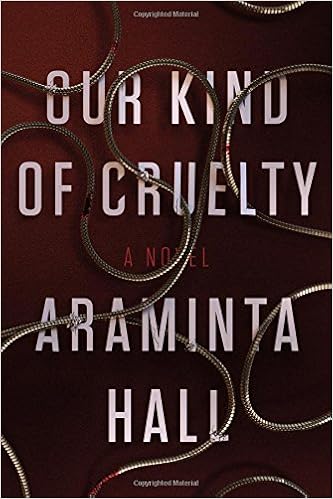
Review: Our Kind of Cruelty by Araminta Hall

Note:  Spoilers to follow and this book is not for teens.


I picked this up because a New York Times reviewer wrote that it was her favorite book thus far this year with an unreliable narrator.  I am a fan of the unreliable narrator and he/she is enjoying a moment, as they say. Here’s the thing.  The unreliable narrator has to be believable in his delusions and there has to be something driving the reader to keep reading.  For example, in Lolita, the best book EVER with an unreliable narrator, the reader encounters something almost unique in literature: a train wreck so beautiful that one cannot look away.  Humbert is vile…he’s beyond vile, but Nabokov's writing is so beautiful, so infused with loveliness, that it is impossible to put down. In short, Our Kind of Cruelty does not offer the reader this incentive.  Sure, Mike is vile, but he’s a buffoon, where Humbert is cultured. Mike is so obviously flawed, the reader never questions that he is not telling the truth, where Humbert is subtle enough to make the reader question whether Charlotte really deserves what she gets. Humbert even makes the reader feel a little sorry for him and a little suspicious of Delores, no mean feat. Mike never does that. He falls flat from the beginning and Verity, while completely unsympathetic, acts in ways that cause problems if one is determined to find her innocent or truthful as her name implies. Why DOES she call Mike on the night of the murder rather than the police?  Why does she let him know that her husband will be out of town? Why does she still wear the Eagle pendant?  These parts of the plot make no sense.  And although we are supposed to know that Mike is making up almost all of their “secret signals,” the objective fact of the phone call, borne out in the court testimony, unless Mike is also lying about that, but then we’re in the realm of what’s the point of even reading it, means that Verity is also complicit, at least to some extent.  I mean, she invited him to her wedding within months of a bad breakup; that doesn’t make sense, no matter how unreliable the narrator is. Or did she?  Maybe Mike imagined the invitation, too? In the Afterward, the author admits that she wrote the manuscript in the throes of anger at men writ large, although she is quick to exempt her loved ones, and it shows.  There are really no sympathetic male characters other than the foster-father, and he is barely in the novel at all. A more effective rant, if you will, would have shown a decent, educated, attractive appearing guy who carries on with delusions about women, while treating them as objects and gets away with it. Ultimately, Our Kind of Cruelty disappoints, both as  a novel with an unreliable narrator and as an attempt to speak the truth about the patriarchy. It is unlikely in the extreme that someone with Mike’s failings would have been able to hold down a high-powered job in banking and hide his nature long enough to do all that he did. The real perpetrators of this type of hidden violence against women are smooth; that’s why they don’t get caught until years later.  If you are desperate for a quick read for the beach, go for it.  Otherwise, pass and pick up something with a little more substance, like maybe reread Lolita…

Thursday, June 8, 2017

BISD Libraries year end report

We decided to try a video, so here you go...

Monday, April 10, 2017

Book History from A to Z: U is for Universities


The earliest universities grew from institutions for the education of clergy, both those in monastic houses and those who were not.  When the monastic orders began to confine their educational efforts to only the members of their orders, cathedral schools began gathering teachers and students.  As towns and cities grew the universities grew with them.  The largest universities in Europe were in Bologna and Paris.  Universities are important to the history of books because the main function of the teachers was to read the classic works in each discipline and comment on them or dispute over them with other professors or students.  That was how students were taught.  The universities began gathering collections of books for students to read and copy.  Some of the books were donated to the universities, others were owned by stationers who would rent them to students in sections to be copied by hand.  The books were necessary for both the reading aloud and for preparing for the disputations—where the two sides of the argument were always given, therefore the professors had to do research and consult the sources of law or theology or whatever subject they were disputing.  Books were still quite expensive during these early days of the university, and most students could not afford to buy them, thus the renting and copying.  At libraries during medieval times, books were often chained to a table in a reading room, so that students could not steal them.

Fortunately, we do not have to chain the books to the table in the reading room any more--we can circulate them to students instead. :)

Image from wikimedia commons. It is in the public domain.

Wednesday, February 1, 2017

Books I have been reading...

I have been slowly working my way through the Best of 2016 and award lists. I also have several e-galleys that I have been reading. Most of them have not been worth writing about, but here are some of the most notable (several good, but one clunker):

The Summer Before the War by Helen Simonson


I started using NPR’s book concierge and decided to begin with this sweet, sad story of the run-up and beginning of World War I in Britain containing a cast of characters who are by turns loveable, laughable, pitiable, and enviable.  Beatrice Nash is the new school mistress in the village of Rye, championed by Agatha, member of the governing board of the school and local grand dame.  Her nephews, Hugh and Daniel, round out the main characters, with a supporting cast that includes a pompous American writer, the local gentry, the mayor and his wife, the vicar’s photographer daughter and more.  The pacing is wonderful--just slow enough that the reader can savor the sweetness, because we, unlike some of the characters, know what is coming.  Readers will want to cheer for Agatha, who is a heroine in the struggle for women’s rights, but without the rancor which so often accompanies that particular virtue. This is not a simple, beach read--it is far more than that.  There are elements of class struggle, the upheaval caused by world events at the time, and even a few hints of secrets better left alone in a small village. All of this is handled with grace and care by Ms. Simonson, who leaves the reader with equal parts pathos and hope at the end.This would be a wonderful book club selection, but it is just a great read that will leave one thinking and feeling about the sacrifices of the generations before our own and hopefully grateful for their fortitude in the face of what must have seemed like insurmountable losses.


His Bloody Project by Graeme Macrae Burnet


Shortlisted for the Man Booker, this is an unusual “crime” novel.  Young Roderick Macrae is in jail for three brutal murders and has written a memoir at the behest of his attorney, who hopes to use some of the information as mitigating factors in Roderick’s trial.  Interspersed with the fictional memoir are additional statements by other characters in the story and medical and court reports.  If you are looking for a book that grapples with moral ambiguity, look no further. I do not want to ruin the book, so I am not going to reveal the ending, but here is a case that pits the little guy against the powers that be, the downtrodden against the system, and the hopeless against those who hold all the advantages. Or is it?  The reader will have to decide for himself.  This book will leave you scratching your head, so if you prefer the end tied up neatly with a bow on top, don’t start reading his Bloody Project.  This ending leaves the reader full of questions that remain unanswered within the pages of the book, but that is part of its brilliance.  


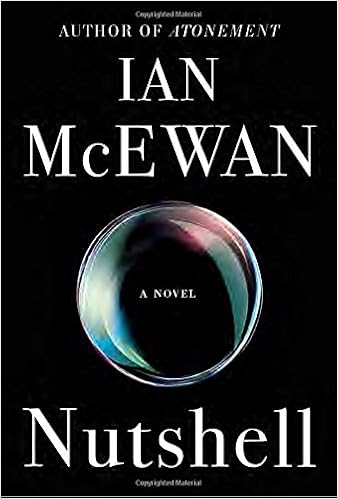
Nutshell by Ian McEwan


One of the 100 Best on the NY Times list, I was intrigued enough to move this to the top of my to be read pile, when I found out that the story was told from the point of view of an unborn child. The prose is beautiful, the insights witty, the humor wicked and the plotting masterful.  Other reviewers mention the Hamlet connection and that is there, but Nutshell is so original in so many ways, starting with POV, that it doesn’t deserve to be labeled simply as a retelling of Hamlet. This is one of those books that makes me want to give up the idea of ever writing a book because McEwan’s writing is so stunning, I know nothing I ever write would come close. Several passages required me to stop and reread; there were so many ideas packed into the tight sentences.  I really cannot recommend it highly enough.


Behind Her Eyes by Sarah Pinsborough


This was billed as psychological suspense, so I got sucked in.  Though it has moments of brilliance, in the end, it falls flat, partially because the main character is so disappointingly dumb and predictable.  She is presented with plenty of evidence about someone and yet refuses to believe her own senses.  Then there is the ending, which is just crazy. I am willing to suspend my disbelief, but I need something to hang that suspension on other than wild fancy.  I knew what was going to happen WAY before I got to the end, since the writer telegraphed it, and I was still disappointed, because I was hoping I was wrong.  Sadly, I wasn’t.  I wouldn’t recommend this unless you are a huge fan of paranormal romance, and when I say huge, I mean you still think Stephanie Meyer is a good writer.

Friday, November 11, 2016

Presentation: Digital Commonplace Books as Culminating Projects

It is good to be in Fort Worth with CCHA!

I have been using digital portfolios as commonplace books for my students for 2 years now, and I have found them to be an effective way for students to think about their learning and also a great way for them to track themselves on the journey.

Here are the links to all presentation materials:

The Prezi


My Digital Commonplace Book Template for HUM 222 on Google Sites

The Student examples live on Canvas.  I had permission to share them with the attendees, but not with the wider world.  A Commonplace Book is kind of a private thing.  

Tuesday, October 18, 2016

Book History A to Z: T is for Typography


Typography is the art of selecting the forms of letters to be used in printing.  It can involve designing the type face, as well as the page layout of a printed page or book.  Typography contributes to the overall ease of reading a book and its appearance—whether it is pleasing to look upon or merely utilitarian.  Early printers often tried to gain a monopoly on certain type designs, as they were beautiful and popular with book collectors, and the printers wanted to use them exclusively so as to gain an advantage in selling their books.  Since there were no strict intellectual property laws, however, this was unrealistic and in most cases impractical.  
Type designers needed to earn a living, too!

Kelmscott Colophon Photograph from Wikimedia Commons, licensed for reuse.

Monday, May 16, 2016

New Book Reviews of Grown Up Books


Here are my most recent book on Good Reads...
I am hoping to write a post about our faculty book club soon!

The Book That Matters Most: A Novel
it was amazing
Ava has had a bad year. Her husband left her after an affair with a local yarn bomber, her fragile, recently released form rehab daughter is studying abroad, and her father is suffering from dementia. The book opens in December, but ther...
The Fallout
really liked it
When Josh and Hannah’s best friends Dan and Sasha split up, they want to remain neutral, but quickly find out that it will be impossible to do so. They find out way more about their friends’ private lives than they ever wanted to know an...
Two Days Gone
it was amazing
Two Days Gone is a taut literary thriller about a college professor and successful novelist, Thomas Huston, who may have murdered his entire family. He is last seen wandering down the street away from his house carrying a knife. Police d...
The Assistants
really liked it
A former assistant herself, Perri writes the ultimate wish fulfillment fantasy about an assistant who accidentally ends up with enough money to pay off her student loans. Sure the first time it was an accident, but when she doesn’t repor...
Dark Matter
liked it
A solid Science Fiction entry with enough explanation to make the reader suspend disbelief up to a point. Jason is a Physics professor in Chicago at a lower tier college. He is married to Daniela and they have on son, Charlie. Jason love...

goodreads.com