Showing posts with label reading. Show all posts

Monday, May 16, 2016

New Book Reviews of Grown Up Books


Here are my most recent book on Good Reads...
I am hoping to write a post about our faculty book club soon!

The Book That Matters Most: A Novel
it was amazing
Ava has had a bad year. Her husband left her after an affair with a local yarn bomber, her fragile, recently released form rehab daughter is studying abroad, and her father is suffering from dementia. The book opens in December, but ther...
The Fallout
really liked it
When Josh and Hannah’s best friends Dan and Sasha split up, they want to remain neutral, but quickly find out that it will be impossible to do so. They find out way more about their friends’ private lives than they ever wanted to know an...
Two Days Gone
it was amazing
Two Days Gone is a taut literary thriller about a college professor and successful novelist, Thomas Huston, who may have murdered his entire family. He is last seen wandering down the street away from his house carrying a knife. Police d...
The Assistants
really liked it
A former assistant herself, Perri writes the ultimate wish fulfillment fantasy about an assistant who accidentally ends up with enough money to pay off her student loans. Sure the first time it was an accident, but when she doesn’t repor...
Dark Matter
liked it
A solid Science Fiction entry with enough explanation to make the reader suspend disbelief up to a point. Jason is a Physics professor in Chicago at a lower tier college. He is married to Daniela and they have on son, Charlie. Jason love...

goodreads.com

Tuesday, January 12, 2016

Read It Forward

As I reset to the role of Middle School Librarian, I am working on ways to reach out to staff and to students.  One of the biggest success stories so far has been the Read It Forward program we ran between Thanksgiving and the Winter holiday break.  Below is the report I gave to the principal so that she could share it with others...
South Belton Middle School
Read It Forward 2015

Read It Forward is a collaborative reading promotion to encourage students and teachers to read and experience the same book during a window of time.  Here’s how it works:   After choosing a title, books are distributed on a  single day, but the number of books is about 1/5 the number of students and teachers.  Books are distributed randomly, with a set of instructions on a sticker inside the book.  The instructions tell students to read the book, write their name inside the front cover and pass it on.  It’s that simple—students and teachers pass the book around until everyone who wants to has had a chance to read it.  During the three week window, students who have read the book and completed a Google Form about it are invited via school email to extension activities related to the book.  The culminating activity was a Skype visit with author Gordon Korman, who talked about his own writing process and encouraged kids to write. 

Behind the curtain of Read It Forward, there was a lot of cooperation among staff at SBMS to make this happen and give the students a fun and meaningful experience.  Once we decided to go for it, the library and the front office shared the cost of the books and the author Skype visit.  the PTA donated book marks for every book.  A Read It Forward committee of teachers and parents worked together virtually through Google Docs to plan the activities and make them happen.  One of the committee’s suggestions was to help build anticipation with a Book Trailer, so the librarian created a web page containing information about the book, a link to a trailer and the instructions for Read It Forward—including links to the Google form for students who had finished the book.  One teacher volunteer helped us find a Tai Chi instructor, while one of our Communities in Schools reps helped supervise crafts in the library.  All the teachers gladly helped hand out the books and many of them motivated the students by reading the book either before or during the RIF window and talking with students about it. 

The book we selected was Schooled.  The students seemed to connect with the book and enjoy reading it.  They also enjoyed the crafts, Tai Chi, and Skyping.  We made parachute cord bracelets and keychains at the first event and many students could be seen wearing theirs even the following week.  After Tai Chi, one student commented that Tai Chi was a lot more fun than he thought it would be, while another came back to thank the librarian personally for arranging the session.  Comments on the Google Form about Schooled included, “This book is so fun to read! You always want to know what happens next and the people in it are hilarious. This book is relatable and just fun. The ending is beautiful,”  and, “It's a good book full of feelings, comedy and just about everything you could want out of a book,that you don't now much about.” 

The author Skype visit was a special activity that all students who had read the book were invited to.  They were also able to ask Mr. Korman questions afterward.  Their questions showed that they were interested in the book and the writing process—one asked about Korman’s inspiration for his characters and one about how he gets ideas for books. 

But the excitement did not stop there.  Students have asked the librarian to form a writing club and to start organizing a writing contest.  The writing club has its first meeting on January 12 and one of the items on the agenda is the writing contest.  Who knows what future authors we have at South Belton Middle School—only time will tell.
 I am hopeful that we will be able to repeat the program next year.  I am also curious to see how the writing club evolves.  I have to give a shout out to Liz Friend at Wester MS in Frisco, Texas, for sharing her notes from her own Read It Forward Program.  The suggestions she made really helped.  Here are a few notes in case you decide to do your own Read It Forward:
  • Choose the book carefully--we went with Schooled by Gordon Korman, because other schools had used it successfully.  Since I wanted this program to go over well, and our students are generally not readers, I chose something I thought would have a very broad appeal.
  • The three week timeline was great!  Thanks to Liz, we had time enough to build to it and then maintain the enthusiasm.  Longer might make it hard to keep things going.  
  • Definitely use Google Docs to manage the committees and documents for the events.  It was a lifesaver and a time saver.
  • Be sure to use the exclusivity to build interest. When kids found out they had to read the book and do something to get invited to the events, they were eager to get their hands on the book.
  • Work on getting buy in from staff and parents before hand.  We were fortunate to have an active PTA and they helped.  The teachers were also very supportive, and the whole thing wouldn't have happened without the principal being willing to let me try something new.
  • Consider Skyping with the author.  Our students loved meeting Gordon via Skype and he was great!  Also, a Skype visit is much more affordable than an in-person visit. 

Tuesday, October 6, 2015

Book Reviews--Love May Fail and In a Dark Dark Wood

Love May Fail by Matthew Quick


An interesting redemption tale told from multiple perspectives, Love May Fail manages to tie up all the loose ends before the final page, and that is saying something.  The opening pages had me howling with laughter, as Portia Kane hides drunkenly in the closet of her own bedroom so she can catch her philandering husband, Ken, in flagrante  and shoot him.  (spoiler—she doesn’t)  She is having a personal crisis and if I hadn’t known the author was a man, I would have sworn it was a woman, so accurate was his writing about a woman’s thoughts, hopes, fears, and issues.  The plot is pretty complex, but revolves around the redemption of Portia’s high school English teacher, Nathan Vernon, who quit teaching and withdrew from life in general after being attacked by a student in his classroom.  Quick nails this part, too.  Mr. Vernon’s meandering thoughts about the futility of teaching, the thanklessness of students and the hopelessness of the whole enterprise are spot on.  Through a series of coincidences, or fate, or the hand of God, whichever you prefer, Portia and Mr. Vernon are brought together, but that part of the story is just the beginning.  Portia also finds true love with someone from her own home town and makes peace with her hoarder mother.  If it sounds convoluted, it is, but it is worth every twist and turn.  Love May Fail will make you laugh; it will make you cry; it will make you think—the three best things a book can do.  Join Portia and the gang on the quest to save Mr. Vernon.  You may just save yourself while you’re at it.

In a Dark Dark Wood by Ruth Ware


This starts off a little slow, but once you get sucked in, and you probably will, it is a fun mystery read for people who like to figure out whodunnit.  An experienced mystery reader will not be surprised, but it is a whole lot of fun getting to the end.  Leonora is invited to a hen weekend (bachelorette party for those of us state side) by Clare, her best friend from childhood, whom she has not seen for ten years.  They had a falling out, which is revealed slowly as the plot unfolds.  The assorted guests are an odd mix and Leonora wonders why she was invited and why she chose to come, but stays anyway.  The party takes place in a glass house (yes, it is really a house made of glass) in , you guessed it, the dark dark woods in the north of England.  Flo is Clare’s current bestie, and she is a little off from the beginning—too eager to please and extremely needy.  Tom, the requisite gay friend, is pretty flat as characters go, but he is the most normal of the hen night guests.  On the last night of the house party, something goes horribly wrong.  I don’t want to spoil it, but the whole thing is slightly reminiscent of Agatha Christie, without the clever and entertaining Hercule Poirot or Miss Marple to figure out what happened.  it is fun and fairly gripping, but there are some plot problems, such as why Leonora would even go to this party in the first place and why it takes her so long to figure out what happened—she is supposed to be a smart crime writer after all.  Light fair for the plane or a weekend at home;  nothing that will cause you to think too hard, but we all need a bit of fluff now and then, and this is pretty decent fluff compared to other options for mystery lovers.

Tuesday, August 4, 2015

Summer Reading

I have been doing some reading, so I thought I would share.
Enjoy!

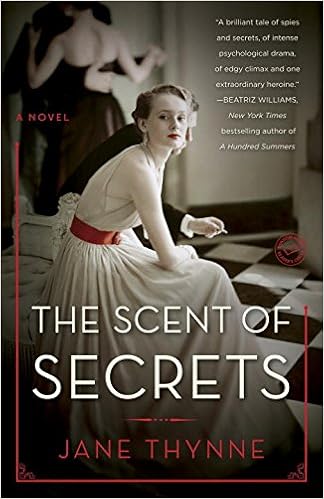
World War II spy thriller, light on the thrills, starring a half fictional half-British actress who loves Germany, but hates what the Nazis are doing to it.  Her profession allows her access to the high echelons of Nazi society, which she uses to gather intelligence.  Of course, there are a couple of brief romantic entanglements, some nail-biting, and the British agent who got away.  Overall, enjoyable if not overly complicated.


The Knockoff by Lucy Sykes and Jo Piazza
More light fair for the beach.  This too-good-to-be-true heroine is a fortyish magazine editor whose former assistant returns to the magazine to be the mean-girl-in-chief.  Totally unbelievable, first that a fortyish magazine editor could be so technologically challenged, and second that the psychotic assistant could manage to manipulate everyone so effectively when she is clearly insane.  However, it is fun to read about the rich and privileged and imagine what life would be like if all your problems could be solved so easily—and you always had the perfect outfit and the perfect hair.  It definitely doesn’t live up to the hype, but consider it a guilty pleasure.


 Palace of Treason by Jason Matthews
Sadly, I found this disappointing.  It was billed as a spy thriller with lots of plot twists and turns.  Written by a former field agent, I was expecting grit, puzzles, analysis.  What I got was a bunch of spies falling into bed with each other and claiming that the infidelity didn’t matter since they were serving a greater good, or some such rot.  I am supposed to feel sympathy for the main male character who cannot keep his trousers zipped up?  Please.  If I wanted to read about that, I would have picked up a classic Ian Fleming novel.  The only reason I finished it was so I could write a scathing review.  I will not be fooled into reading Matthews again, former agent or no.  If this is really what the CIA is up to, no wonder we never know what is going on.

The Truth and Other Lies by Sascha Arango
Finally, something edgy, clever, and not the least bit condescending.  The unreliable narrator will keep you guessing until long after you close the book.  When we meet Henry, he is in the midst of a crisis.  His mistress is pregnant, but he likes being married to his wife, who incidentally, is the author of all the books that have made him a famous author.  What’s a fellow to do?  Read the book and find out.  You might be confused, but you won’t be disappointed.


The End of Men and the Rise of Women by Hanna Rosin
A nonfiction selection that I picked up because of the title.  I thought is seemed a little confrontational.  The text is less so.  Ms. Rosin posits that women are doing better than men in the new economy and that feminists have yet to acknowledge or see it.  I have a surprise for her; I have yet to see it either.  There may be some women at the top end of the spectrum who are doing better, but most of the women I know are still struggling to make less than men, doing more housework and childcare than men, and have less free time than men.  I don’t know, maybe if you are under 30 and have a “big” career, but for most of us regular women, I doubt.  However, she does have some interesting ideas about the future of marriage and family, which are worth reading about.  She does a good job presenting her evidence, and the title is not really indicative of what the book is about.  It is not a “down with men” manifesto, but rather a thoughtful account of the changing nature of gender roles and how we are all adjusting to the new normal. 

Circling the Sun by Paula McLain
I read this because I loved The Paris Wife, McLain’s last big novel.  I loved this one less.  First of all, I found the leading lady, Beryl Markham, much less appealing.  Her willingness to have an affair with Denys Finch-Hatton while she was supposedly friends with Karen Blixen made her completely anathema to me.  I know we don’t have to always like the main character, but in this case, without liking her, or really any of the other people in the book—her mean-spirited husband, her “friends” who were all spoiled debutantes and dandies, there wasn’t really much to hang my hat on.  At least I could root for Hadley and hate Ernest.  In Circling the Sun, I didn’t care whether she crashed the plane or not, I just wanted the insipidness to stop.  Needless to say, I was extremely disappointed in this one, both because I had read and liked this author before, but also because I had been led to believe by other reviewers that this was a great read.  Not so much.
The writing was beautiful, but I couldn’t enjoy it without a good story.


Monday, May 4, 2015

Review--The Whites by Richard Price (Harry Brandt--non-pseudonym pseudonym)


I picked up this novel, because I was intrigued by a NY Times piece I had read about the author, who had attempted, with this book, to write a ‘bestseller” type book rather than his normal “literary crime” novels. I must be honest and say that I found his statement, “I knew how to dress down, but I didn’t know how to write down,” more than a little condescending, as it implies that anything that has mass market appeal is inherently lower than niche writing, or Literary with a capital L writing, for which Mr. Price is apparently vaunted. As the valley girls of the eighties would have said, “gag me with a spoon.” Bless his heart, he just couldn’t write a non-complex novel.

I was prepared to be pretty scathing, but I will say that I found The Whites a hard boiled crime novel with a brain. Price explores themes of friendship, aging parents, circumstance, coincidence, and more with a spare prose that was the more beautiful for not wasting words. I will differ with Mr. Price, though in his estimation of the average reader—I don’t think readers are as dumb as he seems to think they are. Given the choice, most readers will choose a higher quality book, even if it is [gasp] a best seller. I also think that it is possible for a mass market book to be of high quality.

Billy Graves is a New York detective who appropriately works the graveyard shift. He is middle-aged, having passed his glory years as a young detective along with his cohort—collectively known as the Wild Geese. Most of the geese have gone on to retirement, and now work in private security, a funeral parlor, as a building super, and in one notable case, a real estate magnate. Billy alone toils on as a detective. One night there is a strange case involving the murder of one of “The Whites,” the unprosecuted criminals of the Wild Geese. Each of the WGs has one—the one that got away (Moby Dick reference that perhaps Mr. Price thinks most of us won't catch--pun intended). Once Billy starts looking into the murder of his friend’s "White," he goes down a path that will lead to betrayal, suspicion, confession, and a test of what matters most to him. Is it justice or friendship? Will he choose moral high ground, or revenge? When does the end justify the means, or does it ever? Billy wrestles with all of these questions as well as his own slightly tarnished conscience as he works his way to the final confrontation in The Whites. If you enjoy a complex, tightly woven, gritty crime novel, give The Whites a chance, regardless of the pretentious hype, or perhaps in spite of it.

Monday, April 20, 2015

Nonfiction Book Review: Avenue of Spies by Alex Kershaw

The past few years of major anniversaries for important events of World War II coupled with the passing of so many of the heroes and villains of that time have brought forth a plethora of interesting and lesser known stories from the war.  Avenue of Spies tells of the occupation of Paris and the French Resistance from the perspective of an American doctor who lived in Paris and worked at the American hospital there in alternating chapters with the point of view of the Nazi and SS officers who took over most of the residences on the Avenue Foch, where Doctor Sumner Jackson also lived.  The tale includes heroic deeds, nasty Nazis, and slimy collaborators, many of whom were able to thrive after the war when others whose crimes were arguably less, but whose influence and social standing were also less, were imprisoned or executed.  The Germans are portrayed almost completely unsympathetically, as subhuman sadists, which is unfortunate.  A more balanced portrayal might have given the book more depth.  Though there were several gripping passages, as a whole, it is not of the caliber of Ben Macintyre’s work in Double Cross, or Operation Mincemeat.  The material is all there, but somehow, the narrative doesn’t gel.  The reader keeps waiting for the story to get off the starting blocks and it never does.  This is a good title where the interest in World War II or nonfiction espionage is high, but an additional purchase elsewhere. 


Monday, March 23, 2015

Review: Dead Wake by Erik Larson

In the interest of full disclosure, I must admit that I am a big fan of Erik Larson.  In the Garden of Beasts kept me up late at night, The Devil in the White City creeped me out, Thunderstruck left me, well, thunderstruck.  With great anticipation I opened my e-galley (Thank you Crown!) and settled in.  Needless to say, I remain a devoted fan having stayed up late into the night and arisen early the next morning to find out what happened to my favorite passengers and my not so favorite submarine commander.  As is his usual habit, Larson tells the story from two viewpoints—in this case the passengers and captain on the Lusitania and the submarine captain of U-20, who sunk the ship.  Both sides are compelling and offer the reader an almost omniscient view of what is happening.  Larson’s work is copiously researched;  he includes quotations from letters, newspapers, official war records and numerous other primary sources, but the story is anything but dry.  I came away with a new understanding of just how dangerous crossing the ocean could be;  the Lusitania was by no means the only passenger ship to go down.  Many succumbed to accident, like the Titanic, but with a frequency I had not previously realized, and there were many sunk by torpedo during WWI.  And yet, people still traveled on them and in many cases felt quite comfortable doing so.  There was one passenger from the Lusitania, a salesman, who had survived two other ships that went down.  Packed with information, but written with a narrative flow that many fiction books could benefit from, Larson’s latest is on the NYT bestseller list and deserves to be so.

Enjoy!

Tuesday, December 9, 2014

Nonfiction Book Review: The Good Girls Revolt by Lynn Povich

In 1970, a group of women, mostly employed as researchers and fact checkers at Newsweek magazine, filed a lawsuit against the publication for gender discrimination on the same day Newsweek ran a cover story entitled, “Women in Revolt.”  The Good Girls Revolt tells the story of the brave women who risked their futures to make the workplace fairer.  The Newsweek suit was the first class-action suit brought by women, it was also the first by women journalists;  the Newsweek suit would be followed by others at Time, The New York Times, and Reader’s Digest. 
Results were good for some of the women, and less so for others, but many of them recall this as a defining moment in their lives.  They stood up for themselves and the fact that they were being institutionally discriminated against because they were women.  They had the same Ivy League educations and the same writing credentials as the men, and yet they were never going to advance beyond researcher at Newsweek.  In some cases they were told this in no uncertain terms.  Often, women of the sixties accepted this type of treatment as “just the way things were.”  But after the civil rights act was passed including a provision which outlawed sex discrimination, Judy Gingold started attending a conscientious raising group, where she had an “aha” moment that would make all the difference. 
These were not angry, man-hating, bra-burning, feminists.  They were nice girls who had labored under the illusion that hard work and achievement would get them where they wanted to go.  Once they realized those things would never be enough, they decided to do something to change the system. 
I wish every woman under thirty would read this book for two big reasons.  First, they would realize the debt they owe to the women who came before them.  Sometimes, it is tempting to think that the way things are is the way they have always been.  Reading about the real women who put their real reputations on the line to help others might give a little perspective to modern young women.  Second, young women might be less inclined towards apathy.  Women have yet to attain real equality.  It is true that great strides have been made, but as long as women are undervalued and over-sexualized, there is no equality.
An excellent choice for those interested in civil rights, history, or women's issues.
Additional Comments:  
Reviewed as an adult book, I would be comfortable giving this to high school students.  I probably wouldn't recommend it to students below ninth grade due to some sexual content and some mention of drug use and suicide.  As I stated above, I do think this is an excellent choice for older students. It tells a story that needs to be heard. 

Wednesday, October 15, 2014

Review: Us by David Nicholls

Long listed for the Man-Booker prize, this novel turns the “coming of age” story on its head by telling it from the point of view of the father.  Douglas, strait-laced scientist, is happily married to Connie, adventurous artist, until the night she wakes him at 3:00 am to tell him she might want to leave him.  Let the anxiety attacks begin.  Their seventeen-year-old son, Albie, will be going off to college and Connie thinks she may be departing the family home as well.  The trouble is that the Petersen family had planned a grand tour of Europe as a part of Albie’s leave taking.  Douglas has scheduled museums, hotels, trains, everything.  Connie says she sees no reason to cancel the trip and Douglas plans to make the grand tour so wonderfully happy that Connie will decide to stay.  Have you ever planned the perfect family outing only to be foiled by circumstances beyond your control? Poor Douglas and his perfectly laid plans.  As the story of the Petersen family is revealed through Douglas’s flashbacks and narration, the reader gets to know and appreciate him. He is logical, imminently witty, and caring—though he seems to have some difficulty communicating this last quality to those about whom he cares.  There is a particularly poignant lego story, which I refuse to spoil, and what it tells us about Douglas is priceless. The story of the Petersens is the story of many families.  Part love, part dysfunction, part chance:  they are all lovable, but sometimes not likable.  They are Us.

This book is set to be published on October 28, 2014.

Thursday, July 24, 2014

Grown-up Book Review--I am Having So Much Fun Here Without You by Courtney Maum

My summer reading list has included Beautiful Ruins, Before We Met, The Bookman's Tale: a Novel of Obsession, Whatever You Love, and I am Having So Much Fun Here Without You.  I am not going to review all of them, but I will say that I found all of them worth reading and a nice break from teen books.  Give me a complex protagonist, thank you!
Anyway, here is my take on this one, a fairly recent arrival.  By the way, the cover stinks.  If I had seen it before reading it, I might not have bothered to select this one.  What is it with the childish dripping fonts, lately on book covers?  I have seen a zillion of them and they are all equally unappealing.  Someone needs to let the publishers know...


Richard has made the ultimate marital mistake.  Not only did he have sex with another woman, but he went so far as to love her, and for this his beautiful wife, Anne, may not be able to forgive him.  Richard, a British artist, and Anne, a French lawyer, were happily married and doing very well living in Paris.  When Richard begins doing what he considers “decorative” art, paintings that people will want to hang over their sofas, rather than bold political statements as installations, his attention wanders to an American woman he meets at an art film showing.  In this turnabout on the infidelity plot, it is Lisa, the other woman, who is just in it for a fling, and strangely, Richard who seems to want more from her.  However, it is really Richard’s disappointment with the way his art career is going, and his questioning of himself as a man and as a husband that are at the root of his infidelity.  Once the idea that his wife might actually leave him takes root, he discovers that he values that relationship more than he thought.  He wanted to have his cake and eat it, too—nothing new here.  What is new is the fact that he sets about trying to repair his relationship with his wife, instead of taking the easy way out.  At first, he tries all the wrong ways of winning her back, childishly thinking that if he can just rectify a couple of things, he will be restored to her favor.  He soon realizes that it will take more than the return of a painting and an apology to win back her affections.  Like many people, he thinks it is the sex act with someone else that has broken Anne’s heart, when in fact it is his feelings for Lisa, the letters he continued to receive  from her, and his mourning of the end of the affair that are the real betrayal.  Interestingly, it is when he takes a look at himself and tries to rediscover what makes him a productive artist and a satisfied person, that he becomes a more likeable character and begins to make inroads with Anne.  It is through working on his own life, not trying to play on Anne’s sentimentalism, that he becomes a person she might still love.  Trust is another story—you will have to read the book to find out what happens next.

A very satisfying summer read which takes a look at infidelity and the consequences without suffering from too many stereotypes.  A nice sort of reverse-romance for grownups who enjoy a more complex set of motivations and characters.

Wednesday, May 21, 2014

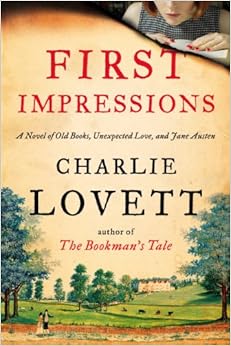
Adult Book Review--First Impressions by Charlie Lovett


Jane Austen fans are in for a treat in this literary mystery cum romance modeled on the beloved novels of Jane Austen. One nice twist is the addition of the parallel storyline about Jane Austen’s fictitious relationship with an older clergyman who helps encourage her writing aspirations.  Many of the questions raised in the accompanying modern day literary mystery and hunt for a rare edition are answered for the reader in flashbacks to the year 1796 and following.  This device allows the reader to guess more than Sophie, the bibliophilic protagonist, is aware of, which guessing is of course half the fun of a mystery in the first place.  There are plenty of clues hidden in various archives and dusty bookshelves to enthrall the readers, most of whom will be of Sophie’s ilk.  When her beloved Uncle Bertram dies under questionable circumstances and his book collection is liquidated by her father to pay Bertram’s debts, Sophie is justifiably outraged.  She begins working in a rare book shop and is approached by two collectors with very different methods (one charming, the other not so much) who are both after the same obscure book.  What she discovers about this book is where the stories of Jane and Sophie meet.  Throw in a romantic American academic who also loves Jane Austen, and we have a single marriage plot that is to die for.  The ending is a little abrupt and a little too easy perhaps, but this too, follows the pattern set by Jane.  Once everyone is in their assigned places, the ending follows quickly, with a little wrap up, in this case not by the narrator, but by the protagonist.  Good fun for all. 

To be published October 16, 2014.

Wednesday, March 5, 2014

Book Clubs and Leopard Print


Over the weekend, I came across an article about the Pulpwood Queens Book Club, which started in Jefferson, Texas and whose queen is now located in Hawkins, Texas.  This book club looks like a lot of fun.  Start with the backstory.  The original queen, Kathy Murphy (nee Patrick), was downsized from her job as a publisher’s rep.  She cast about for something to do and her sister suggested she go back to “doing hair,” which is how she put herself through college.  Kathy decided to go one better and opened up a beauty salon cum book store appropriately named Beauty and the Book.  She also started a book club—the Pulpwood Queens.  Pulpwood refers to the area of Texas in which she resides, the Piney Woods, a prime location for paper pulp industries.  Fast forward a few years and the Pulpwood Queens is an international concern with affiliate clubs called chapters, big events, including a Girlfriends Weekend that ends with a “Hair Ball,” authors and even her own book.  Their motto is “Where tiaras are mandatory and reading good books is the RULE!” And the queens really do wear tiaras, check out their website.  If you do go to the website, you will notice something that unfortunately tarnishes the whole effort for me.  It is an unabashedly commercial enterprise.  The clubs are about reading and fun and I am sure, based on the pages and the article I read, that they do a lot of good work in building literacy and excitement about books.  But it is obvious from the website that it is also about making money. 

You may be wondering why I am writing about this today and I am about to get to it.  Recently, on the TLC listserv, Sandra Carswell posed the questions, “How do you cultivate a ‘culture of reading’ in your school?” and “How do you find time for your readers to meet in person?”  It looks like Kathy Murphy has found a great answer to these question and she has the book clubs, worldwide, to prove it.  How can we translate this into something we can use in a school library?  I know that many school librarians have book clubs, some are successful and others not so much.  What I would suggest is that we look at what the Pulpwood Queens have done and see what elements we can use. Here we go…


  • First, it is unusual and attention grabbing—a beauty shop and bookstore in one?  What aspect of your school could you capture to capitalize on for the “intrigue” factor?


  • Second, she reads good books and everyone reads the same ones.  Now, I know good is in the eye of the beholder, but the bottom line is that she has a committee that selects the books (apparently they have quite a bit of clout) and one of the requirements for membership is that you agree to read the monthly selection of your club.  On the website there are choices, so although I have not attended a meeting, it looks like different affiliates may select according to their preferences.  I believe that reading the same book is key to the question Sandra posed about meeting in person.  When we do not read the same book, we are not really having a conversation about a book.  We are telling others about a book we read and listening to them tell us about one they read.  Having a conversation about the same book is a totally different experience and one that I believe goes much deeper.  We all relate to the book in different ways and when we talk about it together, we see the different points of view of the different readers and how different readers received the same book.  It enlarges our worldview and we also get to know other readers, which will lead to them wanting to make the time to meet in person.


  • Third, she has a lot of fun with her club.  While I myself would be unable to pull off the big hair and leopard print, it works for her.  What can we do in our settings to make the clubs fun?  Have a combination event—book club discusses a book and does something related to it, like go to a movie or make something, or play a game.  We may not all be able to plan a whole weekend around books like the Queens do, but we can all do something fun.


  • Fourth, she turns the clubs loose to see what they can do.  Kathy Murphy started with six women and grew to 150 in Jefferson, Texas.  There are now over 50 chapters in the US and 15 international groups affiliated with the Pulpwood Queens.  She has a book, reading lists, and authors and publishers send her books hoping to get them on the reading list. I am not suggesting that we run a book club like a business.  What I am suggesting is that we start something and stand back to see what happens.  Students are energetic and resourceful; they may turn your book club into a dynamo given the chance.


Take a page from Kathy’s book and start a sensation at your school.  I know I am thinking right now of ways to start a book club near me, tiaras optional.


Special thanks to Sandra Carswell for her permission to use her questions.  
Leopard Print graphic licensed for reuse.