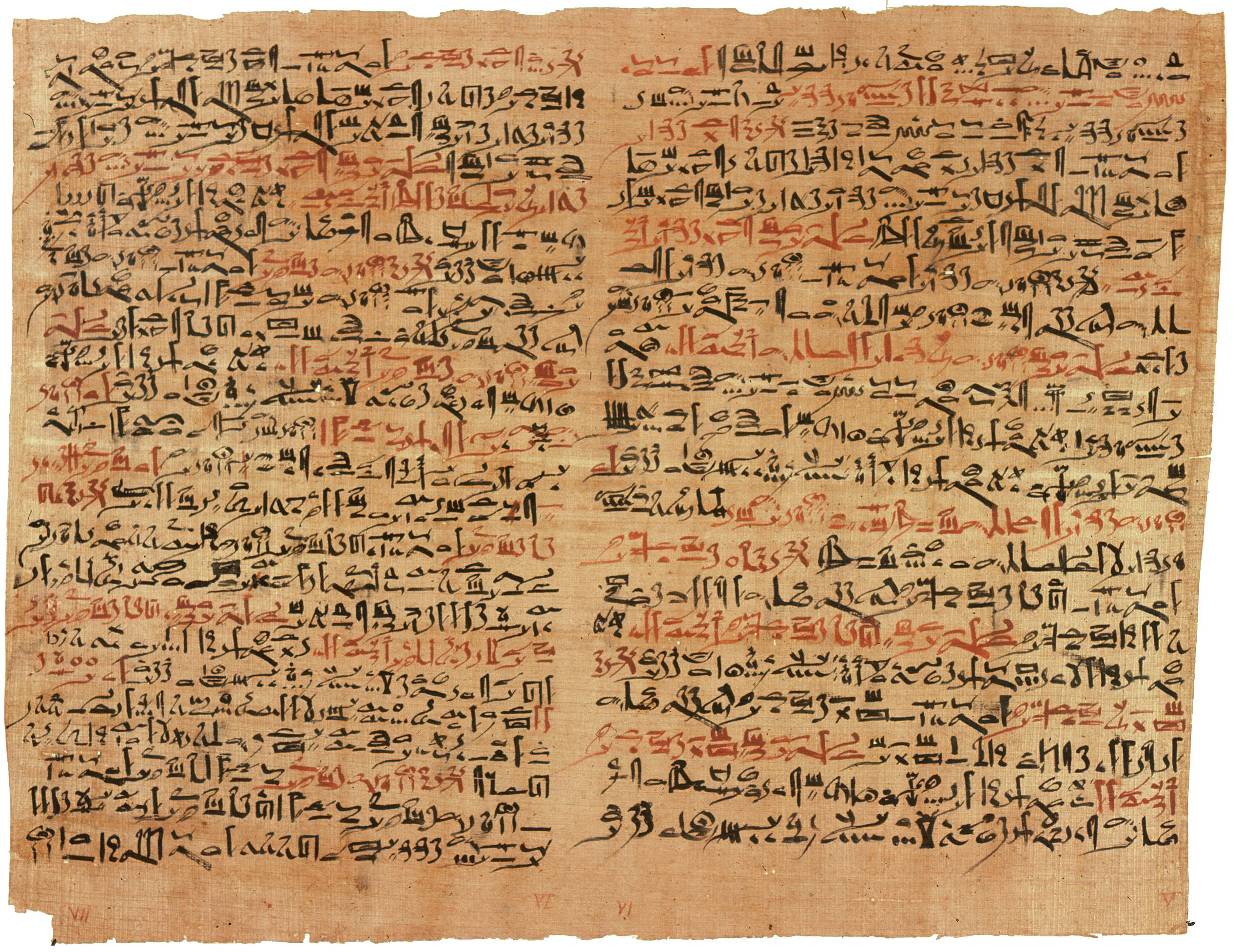
Papyrus was an early form of paper, made from papyrus
plants which grew in the Nile valley of Egypt.
The stems of the plants, which are fibrous, were laid in layers and
pressed. The pressure caused the stems
to bond together when they dried and form into a white paper. Because of the ridges caused by the stems,
the papyrus was difficult to write on horizontally, one reason that
parchment was preferred for Western writing.
Papyrus could only be used on one side, and it was normally rolled and
tied with string, though it could be made into codices.
Paper making began in China in the early 100s CE, was
established in Bagdad around 795, and came to the West by way of the Crusades
and the Moorish conquest of Spain and Portugal.
The demand for paper grew as the printing industry grew, replacing
parchment in the 1400s. At first, paper
was made of rags, which were bleached and made into a pulp, pressed into forms
and dried. This early paper was very
durable. In the 1840s, German paper
manufacturers discovered how to make paper using wood pulp. Later in the same century, chemicals were
added to the process, especially acid, and the paper from this period is very delicate—it
turns yellow and brittle with age and begins to crumble. Newspapers, especially from the 1800s and
early 1900s have greatly deteriorated, while books made from the rag paper in
the 1700s and the first half of the 1800s are still usable. Be sure to print anything you want to keep for a long time on acid free paper. :)
Image is the Edwin Smith Papyrus from en.wikipedia.org

No comments:
Post a Comment