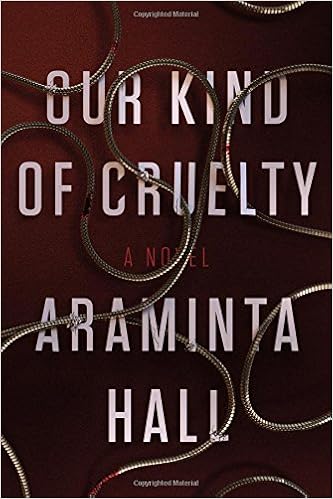
I picked this up because a New York Times reviewer wrote that it was her favorite book thus far this year with an unreliable narrator. I am a fan of the unreliable narrator and he/she is enjoying a moment, as they say. Here’s the thing. The unreliable narrator has to be believable in his delusions and there has to be something driving the reader to keep reading. For example, in Lolita, the best book EVER with an unreliable narrator, the reader encounters something almost unique in literature: a train wreck so beautiful that one cannot look away. Humbert is vile…he’s beyond vile, but Nabokov's writing is so beautiful, so infused with loveliness, that it is impossible to put down. In short, Our Kind of Cruelty does not offer the reader this incentive. Sure, Mike is vile, but he’s a buffoon, where Humbert is cultured. Mike is so obviously flawed, the reader never questions that he is not telling the truth, where Humbert is subtle enough to make the reader question whether Charlotte really deserves what she gets. Humbert even makes the reader feel a little sorry for him and a little suspicious of Delores, no mean feat. Mike never does that. He falls flat from the beginning and Verity, while completely unsympathetic, acts in ways that cause problems if one is determined to find her innocent or truthful as her name implies. Why DOES she call Mike on the night of the murder rather than the police? Why does she let him know that her husband will be out of town? Why does she still wear the Eagle pendant? These parts of the plot make no sense. And although we are supposed to know that Mike is making up almost all of their “secret signals,” the objective fact of the phone call, borne out in the court testimony, unless Mike is also lying about that, but then we’re in the realm of what’s the point of even reading it, means that Verity is also complicit, at least to some extent. I mean, she invited him to her wedding within months of a bad breakup; that doesn’t make sense, no matter how unreliable the narrator is. Or did she? Maybe Mike imagined the invitation, too? In the Afterward, the author admits that she wrote the manuscript in the throes of anger at men writ large, although she is quick to exempt her loved ones, and it shows. There are really no sympathetic male characters other than the foster-father, and he is barely in the novel at all. A more effective rant, if you will, would have shown a decent, educated, attractive appearing guy who carries on with delusions about women, while treating them as objects and gets away with it. Ultimately, Our Kind of Cruelty disappoints, both as a novel with an unreliable narrator and as an attempt to speak the truth about the patriarchy. It is unlikely in the extreme that someone with Mike’s failings would have been able to hold down a high-powered job in banking and hide his nature long enough to do all that he did. The real perpetrators of this type of hidden violence against women are smooth; that’s why they don’t get caught until years later. If you are desperate for a quick read for the beach, go for it. Otherwise, pass and pick up something with a little more substance, like maybe reread Lolita…
Tuesday, May 8, 2018
Review: Our Kind of Cruelty by Araminta Hall
Note: Spoilers to follow and this book is not for teens.
Thursday, June 8, 2017
Monday, April 10, 2017
Book History from A to Z: U is for Universities
The earliest universities grew from institutions for the education of clergy, both those in monastic houses and those who were not. When the monastic orders began to confine their educational efforts to only the members of their orders, cathedral schools began gathering teachers and students. As towns and cities grew the universities grew with them. The largest universities in Europe were in Bologna and Paris. Universities are important to the history of books because the main function of the teachers was to read the classic works in each discipline and comment on them or dispute over them with other professors or students. That was how students were taught. The universities began gathering collections of books for students to read and copy. Some of the books were donated to the universities, others were owned by stationers who would rent them to students in sections to be copied by hand. The books were necessary for both the reading aloud and for preparing for the disputations—where the two sides of the argument were always given, therefore the professors had to do research and consult the sources of law or theology or whatever subject they were disputing. Books were still quite expensive during these early days of the university, and most students could not afford to buy them, thus the renting and copying. At libraries during medieval times, books were often chained to a table in a reading room, so that students could not steal them.
Fortunately, we do not have to chain the books to the table in the reading room any more--we can circulate them to students instead. :)
Image from wikimedia commons. It is in the public domain.
Wednesday, February 1, 2017
Books I have been reading...
I have been slowly working my way through the Best of 2016 and award lists. I also have several e-galleys that I have been reading. Most of them have not been worth writing about, but here are some of the most notable (several good, but one clunker):
The Summer Before the War by Helen Simonson

I started using NPR’s book concierge and decided to begin with this sweet, sad story of the run-up and beginning of World War I in Britain containing a cast of characters who are by turns loveable, laughable, pitiable, and enviable. Beatrice Nash is the new school mistress in the village of Rye, championed by Agatha, member of the governing board of the school and local grand dame. Her nephews, Hugh and Daniel, round out the main characters, with a supporting cast that includes a pompous American writer, the local gentry, the mayor and his wife, the vicar’s photographer daughter and more. The pacing is wonderful--just slow enough that the reader can savor the sweetness, because we, unlike some of the characters, know what is coming. Readers will want to cheer for Agatha, who is a heroine in the struggle for women’s rights, but without the rancor which so often accompanies that particular virtue. This is not a simple, beach read--it is far more than that. There are elements of class struggle, the upheaval caused by world events at the time, and even a few hints of secrets better left alone in a small village. All of this is handled with grace and care by Ms. Simonson, who leaves the reader with equal parts pathos and hope at the end.This would be a wonderful book club selection, but it is just a great read that will leave one thinking and feeling about the sacrifices of the generations before our own and hopefully grateful for their fortitude in the face of what must have seemed like insurmountable losses.
His Bloody Project by Graeme Macrae Burnet
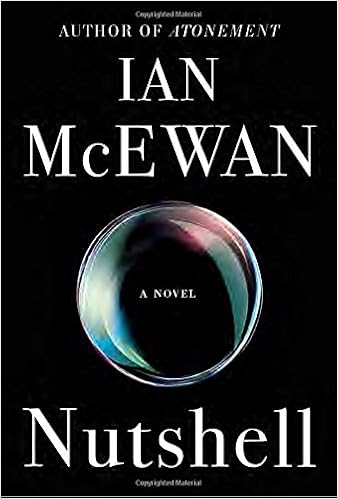
Nutshell by Ian McEwan
Behind Her Eyes by Sarah Pinsborough
This was billed as psychological suspense, so I got sucked in. Though it has moments of brilliance, in the end, it falls flat, partially because the main character is so disappointingly dumb and predictable. She is presented with plenty of evidence about someone and yet refuses to believe her own senses. Then there is the ending, which is just crazy. I am willing to suspend my disbelief, but I need something to hang that suspension on other than wild fancy. I knew what was going to happen WAY before I got to the end, since the writer telegraphed it, and I was still disappointed, because I was hoping I was wrong. Sadly, I wasn’t. I wouldn’t recommend this unless you are a huge fan of paranormal romance, and when I say huge, I mean you still think Stephanie Meyer is a good writer.
Friday, November 11, 2016
Presentation: Digital Commonplace Books as Culminating Projects
It is good to be in Fort Worth with CCHA!
My Digital Commonplace Book Template for HUM 222 on Google Sites
The Student examples live on Canvas. I had permission to share them with the attendees, but not with the wider world. A Commonplace Book is kind of a private thing.
I have been using digital portfolios as commonplace books for my students for 2 years now, and I have found them to be an effective way for students to think about their learning and also a great way for them to track themselves on the journey.
Here are the links to all presentation materials:
The Prezi
My Digital Commonplace Book Template for HUM 222 on Google Sites
The Student examples live on Canvas. I had permission to share them with the attendees, but not with the wider world. A Commonplace Book is kind of a private thing.
Tuesday, October 18, 2016
Book History A to Z: T is for Typography
Typography is the art of selecting the forms of letters to be used in printing. It can involve designing the type face, as well as the page layout of a printed page or book. Typography contributes to the overall ease of reading a book and its appearance—whether it is pleasing to look upon or merely utilitarian. Early printers often tried to gain a monopoly on certain type designs, as they were beautiful and popular with book collectors, and the printers wanted to use them exclusively so as to gain an advantage in selling their books. Since there were no strict intellectual property laws, however, this was unrealistic and in most cases impractical.
Type designers needed to earn a living, too!
Kelmscott Colophon Photograph from Wikimedia Commons, licensed for reuse.
Monday, May 16, 2016
New Book Reviews of Grown Up Books
Here are my most recent book on Good Reads...
I am hoping to write a post about our faculty book club soon!


by Ann Hood
Ava has had a bad year. Her husband left her after an affair with a local yarn bomber, her fragile, recently released form rehab daughter is studying abroad, and her father is suffering from dementia. The book opens in December, but ther...


by Tamar Cohen
When Josh and Hannah’s best friends Dan and Sasha split up, they want to remain neutral, but quickly find out that it will be impossible to do so. They find out way more about their friends’ private lives than they ever wanted to know an...


Two Days Gone is a taut literary thriller about a college professor and successful novelist, Thomas Huston, who may have murdered his entire family. He is last seen wandering down the street away from his house carrying a knife. Police d...


A former assistant herself, Perri writes the ultimate wish fulfillment fantasy about an assistant who accidentally ends up with enough money to pay off her student loans. Sure the first time it was an accident, but when she doesn’t repor...


by Blake Crouch
A solid Science Fiction entry with enough explanation to make the reader suspend disbelief up to a point. Jason is a Physics professor in Chicago at a lower tier college. He is married to Daniela and they have on son, Charlie. Jason love...
Friday, April 15, 2016
My 15 minutes of [almost] fame
I was reading book reviews--an occupational hazard for librarians. We have to keep up, you know. Imagine my surprise, and I will not lie, elation when I saw a sentence I wrote about a book and put on my Good Reads page in the New York Times. Yes! Of course, I am not a named source, just a "Good Reads Reviewer," but still. Here is the article, "Curtis Sittenfield is No Jane Austen, but She's okay with that." The quotation is about 13 paragraphs in. Here is a link to my review of Sittenfield's book on Good Reads, from which the quotation is taken.
You will notice right away, that I fall into the camp that feels that Sittenfield doesn't do Jane justice. I thought her book was crass and commercial and that she just used beloved characters to get her book more traction. I feel it is my duty to warn Janeites when someone unworthy is trying to pull one over on them.
If you are looking for some enjoyable Austen fan fiction, try First Impressions by Charles Lovett. For Jane Eyre fans out there, I can highly recommend The Madwoman Upstairs by Catherine Lowell. Both of these are great fun and very cleverly done. Who else besides me is starting Julian Fellowes's Belgravia? Can't wait to see how that turns out. Happy Reading!
Thursday, March 24, 2016
Book History from A to Z: S is for Stereotyping
And you thought stereotyping was when someone made assumptions about a group of people based on some broad category...read on for the probable origination of the term as we now use it. ;D
Stereotyping was an advance in printing that involved making a mold of an entire page of print. The page could then be printed in future without resetting the type. Besides making reprints cheaper and faster, stereotyping made metal type last longer—it would normally be worn down each time it was used. Stereotyping was tried as early as the 1700s; in 1804 Lord Stanhope invented a method of making a plaster mold of the page of type, then filling the mold with molten lead, in essence making a copy of the “bed of type.” Even though the stereotype plates could make reprints of popular items like Bibles easy to reproduce, it wasn’t widely used during the 1700s partly because typesetters, called compositors, organized into unions to protect their jobs and partly because the process of stereotyping required extra training for workers. The plaster used to make the molds was difficult to clean from the type, and the type could be damaged in the process. Later on, a material called “flong,” which was made of paper, was used to make the molds for stereotyping. Flong did not damage the type as the plaster did and was easily removed from the type.
Photo source: commons.wikimedia.org, labeled for reuse.
Wednesday, March 2, 2016
Future Ready Schools and Open Education
One of the sessions I attended at TCEA was about Future Ready Schools and the Department of Education’s initiatives for a national technology plan. One part of the plan is the movement toward Open Education
The basic idea is that schools from PK to 16 can benefit from resource sharing and that such a program/initiative will help keeps costs for a quality education low by leveling the playing field a little by providing free online/digital resources for learning. The database includes learning resources, lesson plans, websites, and more. Publishers are even donating resources to the project and Follett will be rolling out a search engine that is tied to its Library Management System (Destiny).
You may say—"I can find these on my own, why should I use this database?” There are several reasons:
This database was built with the specific purpose of helping teachers and students find reliable and high value “open” content. If you go to the site, you will also notice that you can browse by educational standards. Unfortunately, Texas State Standards are not on the list, but Common Core and several National Teachers Associations (such as the National Council for Teachers of Mathematics, National Council for Teachers of English, and the National Science Education Standards) are there. It is a tool that should streamline your searches for online resources to use with students and eventually, it should be a tool that students learn to use themselves to find quality resources for their own learning.
By participating in a national initiative, we become a part of the larger conversation about education, technology, and equality.
The basic idea is that schools from PK to 16 can benefit from resource sharing and that such a program/initiative will help keeps costs for a quality education low by leveling the playing field a little by providing free online/digital resources for learning. The database includes learning resources, lesson plans, websites, and more. Publishers are even donating resources to the project and Follett will be rolling out a search engine that is tied to its Library Management System (Destiny).
By next fall, Follett will build an OER search tool, powered by the Learning Registry ( a DOE and DOD and White House-supported effort to create a repository of learning resource metadata) into the Destiny library management software. It will also offer the ability to create lesson plans and playlists.You can search and browse the database of materials. Below is an example of some of the results I found when I browsed by subject. Here is a screen shot of the filters I used:
Wetlands Education through Maps and Aerial Photography (WETMAAP)
Source: www.wetmaap.org
This partnership of government and education seeks to: introduce educators to wetland habitats' functions and values; introduce educators and students to wetland mapping, digital databases, and Global Information System (GIS) technology; assist educators with the integration of wetland issues into e...
http://www.wetmaap.org/index.html
United States Antarctic Research Center
Source: usarc.usgs.gov
The US Antarctic Research Center maintains the Nation's most comprehensive collection of Antarctic maps, charts, atlases, satellite images, photographs, slides, video produced by the United States and other member nations of the Scientific Committee on Antarctic Research. Materials can be ordered. I...
http://usarc.usgs.gov
You may say—"I can find these on my own, why should I use this database?” There are several reasons:
This database was built with the specific purpose of helping teachers and students find reliable and high value “open” content. If you go to the site, you will also notice that you can browse by educational standards. Unfortunately, Texas State Standards are not on the list, but Common Core and several National Teachers Associations (such as the National Council for Teachers of Mathematics, National Council for Teachers of English, and the National Science Education Standards) are there. It is a tool that should streamline your searches for online resources to use with students and eventually, it should be a tool that students learn to use themselves to find quality resources for their own learning.
By participating in a national initiative, we become a part of the larger conversation about education, technology, and equality.
Tuesday, January 12, 2016
Read It Forward
As I reset to the role of Middle School Librarian, I am working on ways to reach out to staff and to students. One of the biggest success stories so far has been the Read It Forward program we ran between Thanksgiving and the Winter holiday break. Below is the report I gave to the principal so that she could share it with others...
South Belton Middle SchoolI am hopeful that we will be able to repeat the program next year. I am also curious to see how the writing club evolves. I have to give a shout out to Liz Friend at Wester MS in Frisco, Texas, for sharing her notes from her own Read It Forward Program. The suggestions she made really helped. Here are a few notes in case you decide to do your own Read It Forward:
Read It Forward 2015
Read It Forward is a collaborative reading promotion to encourage students and teachers to read and experience the same book during a window of time. Here’s how it works: After choosing a title, books are distributed on a single day, but the number of books is about 1/5 the number of students and teachers. Books are distributed randomly, with a set of instructions on a sticker inside the book. The instructions tell students to read the book, write their name inside the front cover and pass it on. It’s that simple—students and teachers pass the book around until everyone who wants to has had a chance to read it. During the three week window, students who have read the book and completed a Google Form about it are invited via school email to extension activities related to the book. The culminating activity was a Skype visit with author Gordon Korman, who talked about his own writing process and encouraged kids to write.
Behind the curtain of Read It Forward, there was a lot of cooperation among staff at SBMS to make this happen and give the students a fun and meaningful experience. Once we decided to go for it, the library and the front office shared the cost of the books and the author Skype visit. the PTA donated book marks for every book. A Read It Forward committee of teachers and parents worked together virtually through Google Docs to plan the activities and make them happen. One of the committee’s suggestions was to help build anticipation with a Book Trailer, so the librarian created a web page containing information about the book, a link to a trailer and the instructions for Read It Forward—including links to the Google form for students who had finished the book. One teacher volunteer helped us find a Tai Chi instructor, while one of our Communities in Schools reps helped supervise crafts in the library. All the teachers gladly helped hand out the books and many of them motivated the students by reading the book either before or during the RIF window and talking with students about it.
The book we selected was Schooled. The students seemed to connect with the book and enjoy reading it. They also enjoyed the crafts, Tai Chi, and Skyping. We made parachute cord bracelets and keychains at the first event and many students could be seen wearing theirs even the following week. After Tai Chi, one student commented that Tai Chi was a lot more fun than he thought it would be, while another came back to thank the librarian personally for arranging the session. Comments on the Google Form about Schooled included, “This book is so fun to read! You always want to know what happens next and the people in it are hilarious. This book is relatable and just fun. The ending is beautiful,” and, “It's a good book full of feelings, comedy and just about everything you could want out of a book,that you don't now much about.”
The author Skype visit was a special activity that all students who had read the book were invited to. They were also able to ask Mr. Korman questions afterward. Their questions showed that they were interested in the book and the writing process—one asked about Korman’s inspiration for his characters and one about how he gets ideas for books.
But the excitement did not stop there. Students have asked the librarian to form a writing club and to start organizing a writing contest. The writing club has its first meeting on January 12 and one of the items on the agenda is the writing contest. Who knows what future authors we have at South Belton Middle School—only time will tell.
- Choose the book carefully--we went with Schooled by Gordon Korman, because other schools had used it successfully. Since I wanted this program to go over well, and our students are generally not readers, I chose something I thought would have a very broad appeal.
- The three week timeline was great! Thanks to Liz, we had time enough to build to it and then maintain the enthusiasm. Longer might make it hard to keep things going.
- Definitely use Google Docs to manage the committees and documents for the events. It was a lifesaver and a time saver.
- Be sure to use the exclusivity to build interest. When kids found out they had to read the book and do something to get invited to the events, they were eager to get their hands on the book.
- Work on getting buy in from staff and parents before hand. We were fortunate to have an active PTA and they helped. The teachers were also very supportive, and the whole thing wouldn't have happened without the principal being willing to let me try something new.
- Consider Skyping with the author. Our students loved meeting Gordon via Skype and he was great! Also, a Skype visit is much more affordable than an in-person visit.
Wednesday, November 18, 2015
Myth of the Digital Native presentation from CCHA
Monday, October 26, 2015
Book History A to Z: R is for Roman a clef
I find this one pretty interesting--it is sort of like an "unauthorized" biography, only it goes a step further by fictionalizing those involved. Of course, part of the reason is to prevent the author from being hauled into court, or otherwise retaliated against, but as you know that doesn't always work. The translation is "novel with a key," they key presumably being knowing who is who in the book. According to one source, the originals actually had a key--published separately, that named names.
The Roman a clef began, according to the Encyclopedia Britannica, during the 17th century in France, when a few stout souls dared to write about courtiers of Louis XIV and include them in historical fiction. Later examples include Simone de Beauvior's Mandarins, and the more recent Primary Colors.
Tuesday, October 6, 2015
Book Reviews--Love May Fail and In a Dark Dark Wood
Love May Fail by Matthew Quick
An interesting redemption tale told from multiple perspectives, Love May Fail manages to tie up all the loose ends before the final page, and that is saying something. The opening pages had me howling with laughter, as Portia Kane hides drunkenly in the closet of her own bedroom so she can catch her philandering husband, Ken, in flagrante and shoot him. (spoiler—she doesn’t) She is having a personal crisis and if I hadn’t known the author was a man, I would have sworn it was a woman, so accurate was his writing about a woman’s thoughts, hopes, fears, and issues. The plot is pretty complex, but revolves around the redemption of Portia’s high school English teacher, Nathan Vernon, who quit teaching and withdrew from life in general after being attacked by a student in his classroom. Quick nails this part, too. Mr. Vernon’s meandering thoughts about the futility of teaching, the thanklessness of students and the hopelessness of the whole enterprise are spot on. Through a series of coincidences, or fate, or the hand of God, whichever you prefer, Portia and Mr. Vernon are brought together, but that part of the story is just the beginning. Portia also finds true love with someone from her own home town and makes peace with her hoarder mother. If it sounds convoluted, it is, but it is worth every twist and turn. Love May Fail will make you laugh; it will make you cry; it will make you think—the three best things a book can do. Join Portia and the gang on the quest to save Mr. Vernon. You may just save yourself while you’re at it.
In a Dark Dark Wood by Ruth Ware
This starts off a little slow, but once you get sucked in, and you probably will, it is a fun mystery read for people who like to figure out whodunnit. An experienced mystery reader will not be surprised, but it is a whole lot of fun getting to the end. Leonora is invited to a hen weekend (bachelorette party for those of us state side) by Clare, her best friend from childhood, whom she has not seen for ten years. They had a falling out, which is revealed slowly as the plot unfolds. The assorted guests are an odd mix and Leonora wonders why she was invited and why she chose to come, but stays anyway. The party takes place in a glass house (yes, it is really a house made of glass) in , you guessed it, the dark dark woods in the north of England. Flo is Clare’s current bestie, and she is a little off from the beginning—too eager to please and extremely needy. Tom, the requisite gay friend, is pretty flat as characters go, but he is the most normal of the hen night guests. On the last night of the house party, something goes horribly wrong. I don’t want to spoil it, but the whole thing is slightly reminiscent of Agatha Christie, without the clever and entertaining Hercule Poirot or Miss Marple to figure out what happened. it is fun and fairly gripping, but there are some plot problems, such as why Leonora would even go to this party in the first place and why it takes her so long to figure out what happened—she is supposed to be a smart crime writer after all. Light fair for the plane or a weekend at home; nothing that will cause you to think too hard, but we all need a bit of fluff now and then, and this is pretty decent fluff compared to other options for mystery lovers.
Tuesday, September 29, 2015
The Myth of the Digital Native in print form...
I had previously written a five part series about the Myth of the Digital Native.
Part 1: The initial post with outline
Part 2: Assumptions
Part 3: Multitasking
Part 4: Why remember something when we can look it up?
Part 5: So what?
This month the printed version was published in School Library Connection's (formerly Library Media Connection) debut issue. I am honored to appear in print.
In July, I moved unexpectedly and had to change libraries, so my plan to use the action research project to build a series of digital literacy online modules is on hold. I hope to be able to incorporate this work into my new school library program.
In November, I will be giving a presentation based on this article and the blog series at the Community College Humanities Association in Phoenix. I am looking forward to hearing the discussion there. Hopefully, it will yield helpful fruit for teachers and librarians at all levels.
Tuesday, August 4, 2015
Summer Reading
I have been doing some reading, so I thought I would share.
Enjoy!
Enjoy!
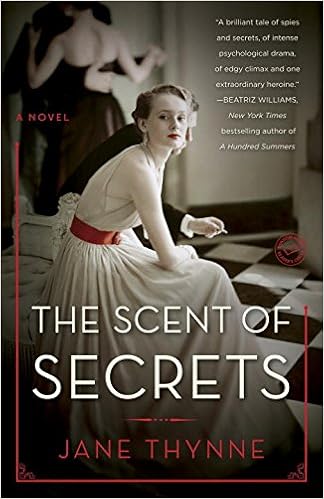
World War II spy thriller, light on the thrills, starring
a half fictional half-British actress who loves Germany, but hates what the
Nazis are doing to it. Her profession
allows her access to the high echelons of Nazi society, which she uses to
gather intelligence. Of course, there
are a couple of brief romantic entanglements, some nail-biting, and the British
agent who got away. Overall, enjoyable
if not overly complicated.
The Knockoff by Lucy Sykes and Jo Piazza
More light fair for the beach. This too-good-to-be-true heroine is a
fortyish magazine editor whose former assistant returns to the magazine to be
the mean-girl-in-chief. Totally
unbelievable, first that a fortyish magazine editor could be so technologically
challenged, and second that the psychotic assistant could manage to manipulate
everyone so effectively when she is clearly insane. However, it is fun to read about the rich and
privileged and imagine what life would be like if all your problems could be
solved so easily—and you always had the perfect outfit and the perfect
hair. It definitely doesn’t live up to
the hype, but consider it a guilty pleasure.
Palace of Treason by Jason Matthews
Sadly, I found this disappointing. It was billed as a spy thriller with lots of
plot twists and turns. Written by a
former field agent, I was expecting grit, puzzles, analysis. What I got was a bunch of spies falling into
bed with each other and claiming that the infidelity didn’t matter since they
were serving a greater good, or some such rot.
I am supposed to feel sympathy for the main male character who cannot
keep his trousers zipped up?
Please. If I wanted to read about
that, I would have picked up a classic Ian Fleming novel. The only reason I finished it was so I could
write a scathing review. I will not be
fooled into reading Matthews again, former agent or no. If this is really what the CIA is up to, no
wonder we never know what is going on.
The Truth and Other Lies by Sascha Arango
Finally, something edgy, clever, and not the least bit
condescending. The unreliable narrator
will keep you guessing until long after you close the book. When we meet Henry, he is in the midst of a
crisis. His mistress is pregnant, but he
likes being married to his wife, who incidentally, is the author of all the
books that have made him a famous author.
What’s a fellow to do? Read the
book and find out. You might be
confused, but you won’t be disappointed.
The End of Men and the Rise of Women by Hanna Rosin
A nonfiction selection that I picked up because of the
title. I thought is seemed a little
confrontational. The text is less
so. Ms. Rosin posits that women are
doing better than men in the new economy and that feminists have yet to
acknowledge or see it. I have a surprise
for her; I have yet to see it either.
There may be some women at the top end of the spectrum who are doing
better, but most of the women I know are still struggling to make less than
men, doing more housework and childcare than men, and have less free time than
men. I don’t know, maybe if you are
under 30 and have a “big” career, but for most of us regular women, I
doubt. However, she does have some
interesting ideas about the future of marriage and family, which are worth
reading about. She does a good job presenting
her evidence, and the title is not really indicative of what the book is
about. It is not a “down with men”
manifesto, but rather a thoughtful account of the changing nature of gender
roles and how we are all adjusting to the new normal.
Circling the Sun by Paula McLain
I read this because I loved The Paris Wife, McLain’s last
big novel. I loved this one less. First of all, I found the leading lady, Beryl
Markham, much less appealing. Her willingness
to have an affair with Denys Finch-Hatton while she was supposedly friends with
Karen Blixen made her completely anathema to me. I know we don’t have to always like the main
character, but in this case, without liking her, or really any of the other
people in the book—her mean-spirited husband, her “friends” who were all
spoiled debutantes and dandies, there wasn’t really much to hang my hat
on. At least I could root for Hadley and
hate Ernest. In Circling the Sun, I didn’t
care whether she crashed the plane or not, I just wanted the insipidness to
stop. Needless to say, I was extremely
disappointed in this one, both because I had read and liked this author before,
but also because I had been led to believe by other reviewers that this was a
great read. Not so much.
The writing was beautiful, but I couldn’t enjoy it
without a good story.
Subscribe to:
Posts (Atom)