This is by NO means a complete history of libraries. There are entire books on the subject: I attended a class last summer, in which I spent about 35 hours learning about the history of Academic Libraries, and we could have easily spent another 35 hours. This tiny article just gives the reader the broad strokes. Really broad.
Libraries started out as records collections or archives
for temples and centers of government in the ancient world. The Greeks, Romans, Egyptians, and Assyrians
among others all had some form of library or archive. There is every indication
that wealthy individuals collected books and scrolls and had personal
libraries. Cicero had a personal library, as did Ptolemy Philedelphus. The most famous ancient library was at
Alexandria in Egypt, said to have a mission to collect the whole of Greek
literature, it even had an ordering system for the retrieval of items. This would have been necessary, since the
collection is estimated to have been in the neighborhood of the hundreds of thousands. Julius Caesar made plans to build a public
library, but it was not built before his death.
The work was completed by Asinius Pollio. Other Roman emperors
also built public libraries.
Constantinople was home to great collections of books in libraries, too, and it is through this Eastern empire that
most of the Greek classics were preserved.
During medieval times in Europe, libraries were often a part of
monasteries. Monks copied earlier works
to preserve them, and added to the libraries’ collection their own notes from
University. Universities had libraries
to contain the scholarly works the students and master studied as well as the
publications of their best writers and most influential scholars. During the late Middle Ages, some people had
private book collections, though usually only wealthy members of the
aristocracy or the church could afford to have such a collection.
With the development of printing, the circle
of people who could own books widened, and continued to do so through the
development of better and cheaper ways of making books. By the seventeenth and eighteenth centuries
book collecting was widespread, and not just among the wealthy. Literacy was also much more widespread than in previous years. Late in the eighteenth century subscription
and membership libraries became popular especially in England and the United
States. These member libraries were
groups of people who joined together to buy books and subscribe to new
publications, including newspapers in order to spread the cost among the
members and allow access to more reading material than one person could reasonably
afford.
By the middle of the nineteenth
century, many people had come to believe that libraries for communities should
be maintained by the government, and public libraries developed once again. For the United States, especially, libraries
were seen as essential to maintaining a free society, since only an educated
electorate was competent to vote.
Self-education through the use of the library was an equalizer when not
everyone had the money or time to take part in formal education. In recent years, the role and view of libraries as repositories of knowledge have changed drastically. Some maintain that libraries provide "infotainment," while others wonder whether the mission of public libraries has changed from an educational one to something more akin to a community center. There are those who question whether public libraries, or indeed libraries of any kind, will continue to thrive.
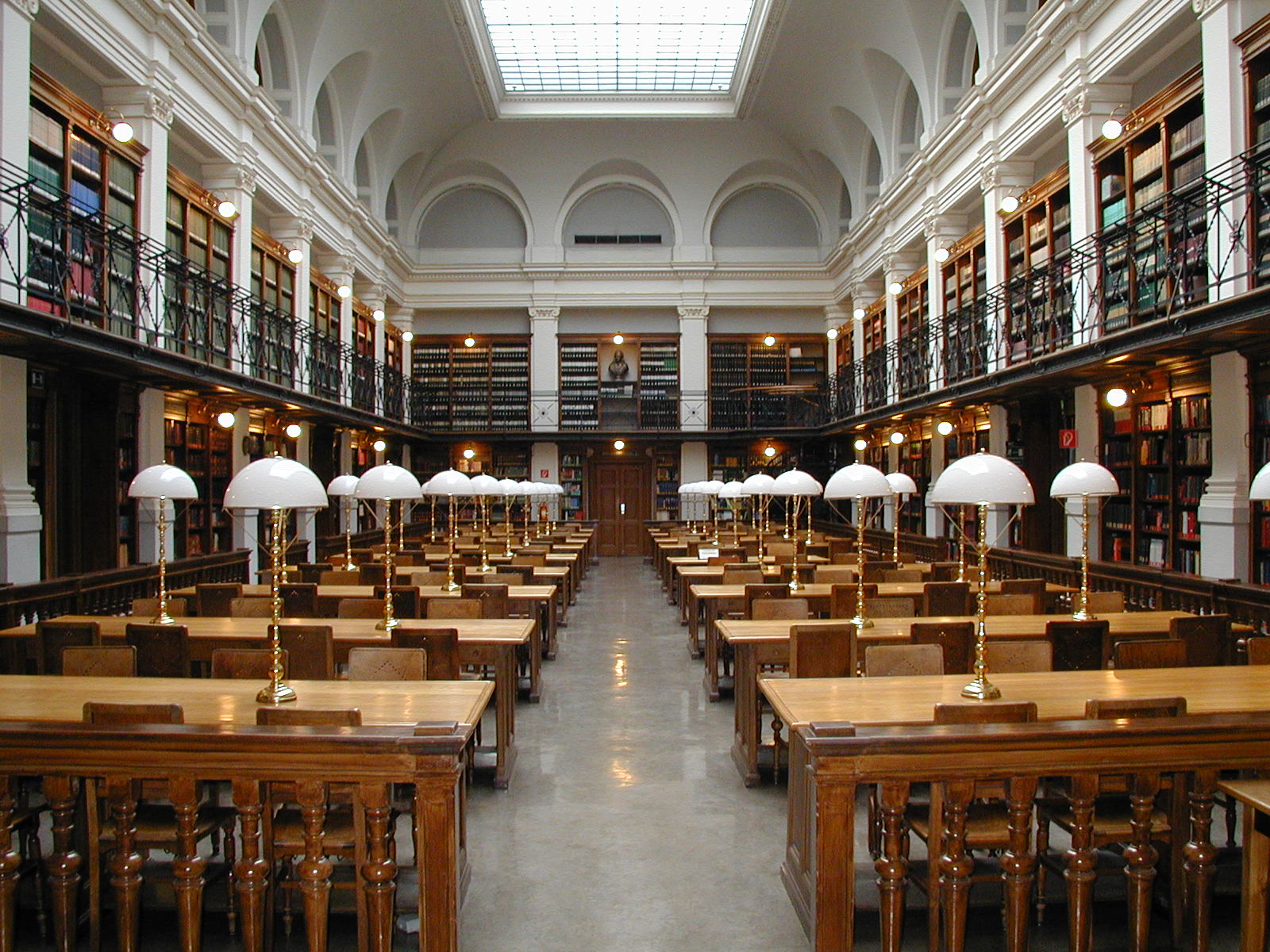
Photo from Wikipedia--The Eötvös Loránd University Library in Budapest

No comments:
Post a Comment